The Success Platform For Caregivers
A Longitudinal Navigation System for IDD and Aging Communities.
We're supporting caregivers across health, disability, aging, and work — over decades, not moments.
A Longitudinal Navigation System for IDD and Aging Communities.
Caregivers are forced to navigate
a fragmented system alone.
Systems operate in silos

Burnout impacts workforce stability

Families self-coordinate care

Support lacks continuity

Caregiving Is a National Infrastructure Challenge
Despite the scale, caregiving remains fragmented without navigable systems or durable infrastructure to support families over time.
63 million
Americans provide unpaid care for a loved one with chronic illness, disability, or aging-related needs.

Approximately 750,000 people
Are diagnosed annually with Alzheimer’s disease or related dementias in the United States.
65 million Americans are age 65 or older
A population continuing to grow each year.


More than 7 million Americans age 65 and older
Are living with Alzheimer’s dementia — and the number is expected to grow as the population ages.
Nearly 70% of family caregivers are employed, representing approximately 44 million working caregivers balancing care and full-time work.
Caregiving Is Long-Term
Caregiving today spans decades and often multiple family members. It is no longer episodic, but a long-term responsibility requiring coordination and planning.
Aging in Place
Most care now happens at home. Families prefer aging in place, but home-based care requires structured guidance and system navigation.
Our Approach
We build systems, not point solutions. Chronic Care Advocates designs longitudinal infrastructure that evolves as caregiver needs change.

myHana, Our Flagship Platform
myHana is a caregiver operating system built on four integrated pillars:
%201.avif)
Founder Origin
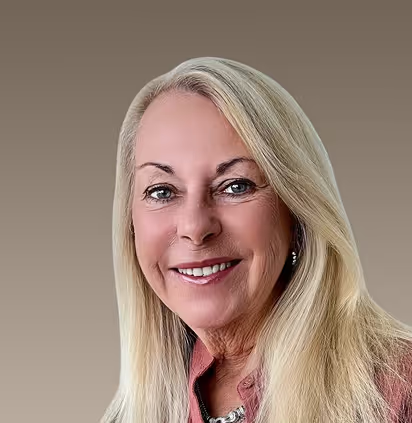
Founded by caregivers Nicholas and Diane Garofolo, Chronic Care Advocates is shaped by lived experience and a commitment to durable caregiver infrastructure.

Value to Systems
Caregiver strain is a systems issue impacting workforce stability, healthcare costs, and public efficiency.
Long-Term Vision
Our mission is to build infrastructure that
supports families across generations.